
Industry News
home page » Industry NewsArticle Details
The difference between solid beverages and special diets
(1) Different execution criteria
Solid beverages should comply with regulations such as the National Food Safety Standard for Beverages (GB7101-2015). Different types of special diets comply with the National Food Safety Standard General Principles for Special Dietary Foods (GB29922-2013) or other relevant laws and regulations.
(2) Different regulatory methods
Solid beverages are classified into ordinary foods based on their types, and their product formulas, labels, ingredient lists, instructions, etc. do not require approval from relevant agencies. They can be produced and sold with a production and operation license. Special diets need to be approved by the State Administration for Market Regulation in terms of production technology, instructions, product ingredients, etc., and can only be produced after obtaining a production and operation license.
(3) Different tag information
Solid beverage labels should comply with the relevant provisions of the National Food Safety Standard General Rules for Pre packaged Labels (GB7718-2011); Special dietary labels should comply with the relevant provisions of the National Food Safety Standard for Pre packaged Special Dietary Food Labels (GB13432-2013). Solid beverages do not require approval as they are regular food, so there is no registration number on the label. On the contrary, special diets require information such as applicable population, product registration number, and product name on their labels, and their registration number can be found on the official website of the State Administration for Market Regulation.
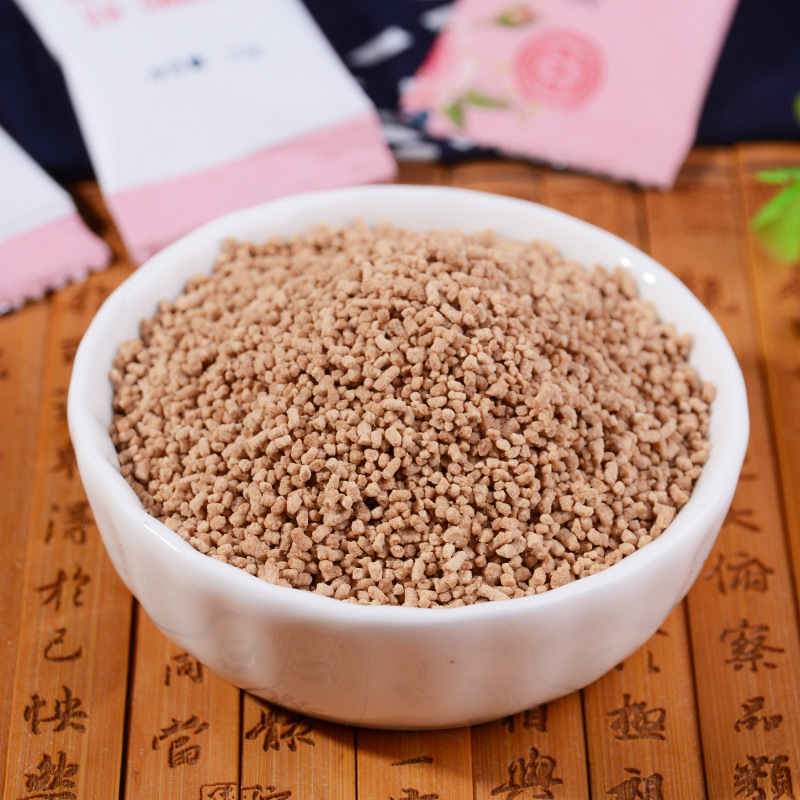
Classification of Solid Beverages
1. Solid beverages are mainly made from certain raw materials and processed with other auxiliary materials. According to the category of their main raw materials, solid beverages can be divided into three types: fruity, protein, and other types.
Fruit flavored solid beverage: mainly made from sugar, fruit juice, nutritional fortifiers, etc., and brewed with water, it has sensory experiences such as taste, color, and aroma that match the product name. According to the amount of original juice, it is divided into fruity and juice types. The so-called fruit juice solid beverage is a solidified fruit and vegetable juice.
2. Protein based solid beverage: Its main ingredients are sugar, protein, plant protein, dairy products, etc. It is a solid beverage. For example, the content of protein and plant protein exceeds or equals 5%.
3. Other types of solid beverages: 1. Mainly made from flower tea, honeysuckle, chrysanthemum, etc., supported by multiple processes, such as lemon tea, brown sugar ginger tea, etc. 2. Mainly composed of sugar, with ingredients such as coffee, cocoa, dairy products, etc., but its protein content is lower than the standard for protein based solid beverages. 3. Products made from food embedding agents that absorb coffee and other food additives as raw materials.
What are the trademarks for solid beverages. Which standard should be followed for OEM (which standard should merchants follow when registering trademarks)
Due to different regulatory authorities, it is difficult for market entities to choose their products, making it difficult for merchants engaged in solid beverage business to register their product trademarks. Below, the editor will give a brief explanation.
1. Solid beverage refers to the "product type", which is determined based on two aspects: "consumption method" and "appearance". At the same time, powders, granules, and chunks all belong to the category of solid beverages, while milk powder, coffee, and instant tea are therefore unique
Specially assigned "product attributes". This is due to the lack of clear classification of product attributes by the government.
2. Food trademarks are classified based on factors such as "raw materials" and "taste"
Solid beverage products can choose 30 or 32 types of trademarks, such as tea drinks, plant-based drinks, protein drinks, etc., based on the different raw materials selected.
Thirdly, online platforms require merchants to provide "functional" trademarks based on "product functionality"
Kwai stores, Tiktok, Vipshop, Jingdong, Taobao and other online platforms classify stock based drinks as "composite functional food" and require merchants to provide category 5 trademarks corresponding to "dietary supplements".
In summary, based on the positioning of solid beverages as ordinary food, merchants should choose Class 5 when registering trademarks to meet platform requirements. As for the trademark subcategory, it can be selected based on the product raw materials. Friends who solve the problem of solid beverage trademark registration, please like "Wanhuacao"!


0558-5591189
510624063@qq.com
More than 300 testing items, over 100 identification items, and over 40 development and analysis methods
 Friendship Links
No. 319 Yueji Road, Bowu Modern Industrial Park, High tech Zone, Bozhou City, Anhui ProvinceAnhui ICP No. 2022015297-1